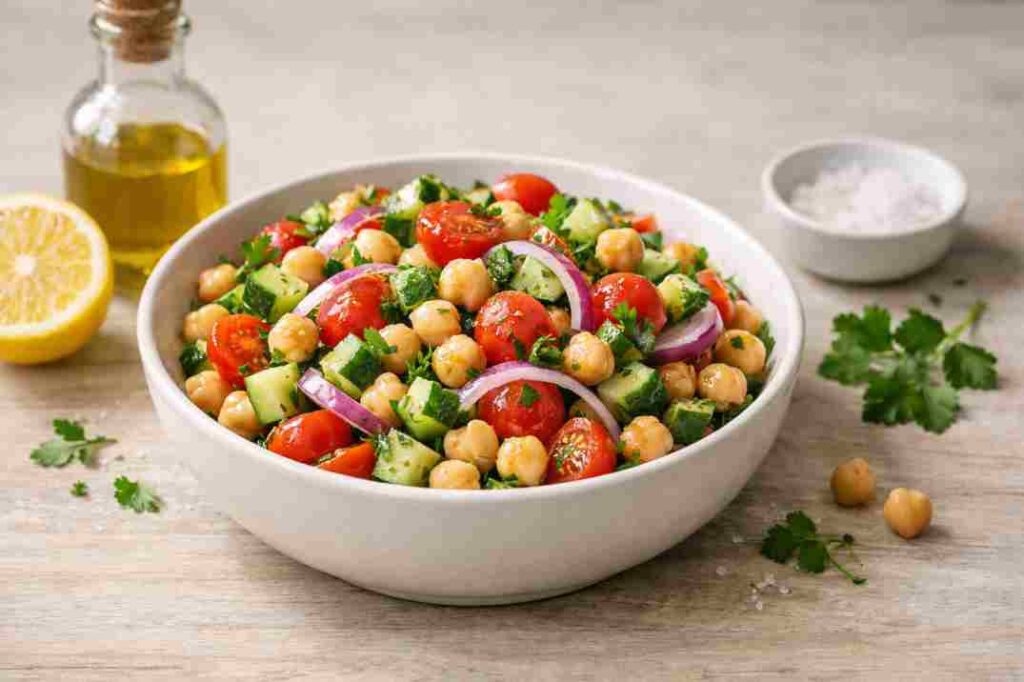
Chickpea salads are one of those things I lean on when I don’t feel like cooking but still want something that actually fills me up. They’re easy, forgiving, and you don’t need anything fancy to make them taste good. Mediterranean flavors just make sense here — olive oil, lemon, fresh vegetables, herbs — nothing complicated, but somehow it always works.
This is one of those salads I make when I open the fridge and don’t feel inspired. I’ve made countless versions of this over the years, tweaking things based on what I had on hand, and this one just works. It’s fresh, hearty without being heavy, and doesn’t feel like “diet food” at all.
I keep coming back to this Mediterranean chickpea salad because it fits real life. I can throw it together quickly, eat it for lunch a few days in a row, and still look forward to it.
Why Mediterranean Chickpea Salad Works So Well
There’s a reason I keep making some version of a Mediterranean chickpea salad instead of getting bored of it. It checks a lot of boxes without trying too hard.
First, the ingredients are simple. Chickpeas, vegetables, olive oil, lemon — things I already buy and use regularly. I don’t have to hunt down specialty items or plan a whole grocery trip around one recipe. Most of the time, I’m just using what’s already in my fridge.
It’s also naturally filling. Chickpeas have enough substance that the salad feels like a real meal, not just a side. I can eat a bowl of this for lunch and not feel like I’m starving an hour later. That’s a big reason it stays in my rotation.
Another thing I love is how flexible it is. I’ve eaten this as a quick lunch, a light dinner, and even as a side at family meals. Sometimes I add extra protein, sometimes I don’t. Sometimes I serve it with bread, sometimes straight from the bowl.
And honestly, it doesn’t feel like “healthy food” in that boring way. The flavors are bold enough that I’m not thinking about what it’s supposed to be — I’m just enjoying it. For anyone easing into Mediterranean-style eating, this kind of salad feels realistic and sustainable.
The Fresh Ingredients I Always Use (And Why)
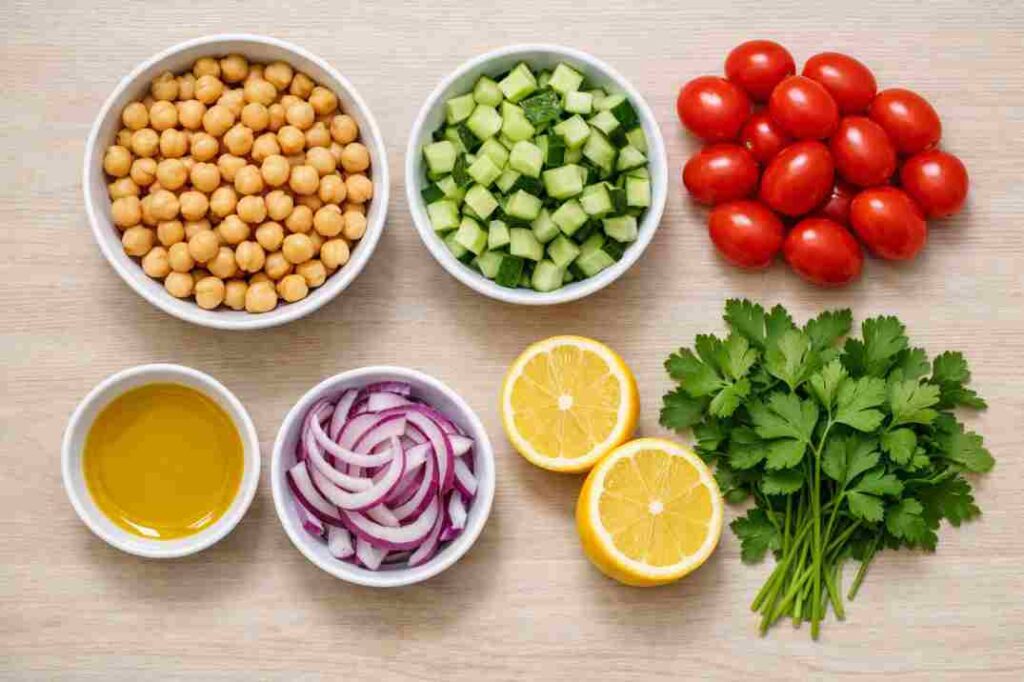
I don’t overthink the ingredients for this salad. That’s part of why I actually make it.
Chickpeas:
Most of the time, I use canned chickpeas. They’re easy, consistent, and always available. If I have time and remember to plan ahead, I’ll cook dried chickpeas from scratch, but that’s not the norm. The key is rinsing them well and letting them dry a bit so they don’t water down the salad.
Vegetables:
Cucumbers and tomatoes are non-negotiable for me. They give that fresh, juicy crunch that makes the whole salad feel alive. Red onion adds bite, but I keep it light. If it’s too strong, I’ll soak it in cold water for a few minutes first.
Herbs:
Fresh parsley is my go-to. Sometimes I add mint if I have it, but parsley alone works beautifully. I skip dried herbs here — fresh really makes a difference.
Olive oil and acid:
Good olive oil matters more than people think. It doesn’t have to be expensive, just something you like the taste of. For acid, I usually use lemon juice, but red wine vinegar works too. I adjust as I go because tomatoes can be more or less acidic depending on the season.
I use what I have in the fridge, and that’s the point. These ingredients are easy to find, easy to prep, and forgiving if you swap things around.
The Recipe: Easy Mediterranean Chickpea Salad
Recipe Overview
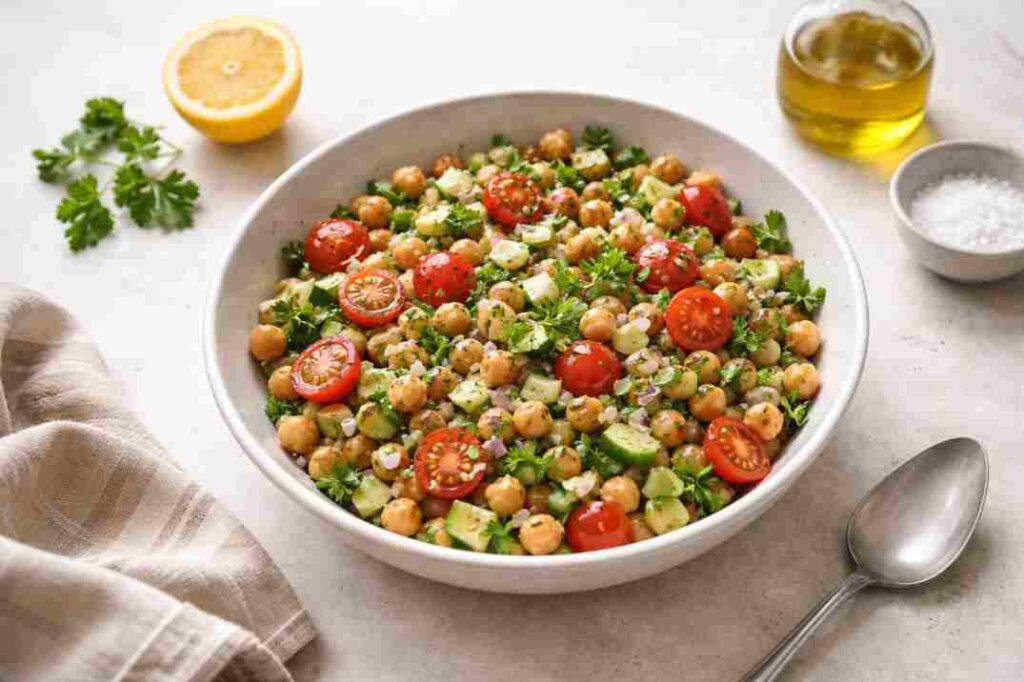
This Mediterranean chickpea salad is fresh, bright, and satisfying without being heavy. The flavors are clean and simple — lemony, slightly briny, herb-forward, with enough olive oil to pull everything together.
I usually make this on Sundays or whenever I know the week is going to be busy. It holds up well in the fridge, and the flavors actually get better after a few hours. That makes it perfect for meal prep lunches or quick dinners when I don’t want to think.
What makes this work for meal prep is the balance. The chickpeas stay firm, the vegetables keep their crunch if you prep them right, and the dressing doesn’t overpower everything.
Ingredients List
Salad Base
- 2 cans chickpeas, rinsed and drained well
Fresh Vegetables
- 1 large cucumber, diced
- 1½ cups cherry tomatoes, halved
- ¼ small red onion, finely chopped
Herbs
- ½ cup fresh parsley, chopped
- Optional: a small handful of fresh mint
Dressing
- ¼ cup extra virgin olive oil
- 2–3 tablespoons fresh lemon juice
- 1 small garlic clove, grated or very finely minced
- Salt, to taste
- Black pepper, to taste
Optional add-ins I use sometimes:
- Kalamata olives
- Crumbled feta (if I’m not keeping it dairy-free)
Step-by-Step Instructions
This isn’t a complicated recipe, but the order you do things — and how you do them — makes a big difference. I learned most of this the hard way after making plenty of bland or watery chickpea salads over the years.
1. Start with the chickpeas (this matters more than you think)
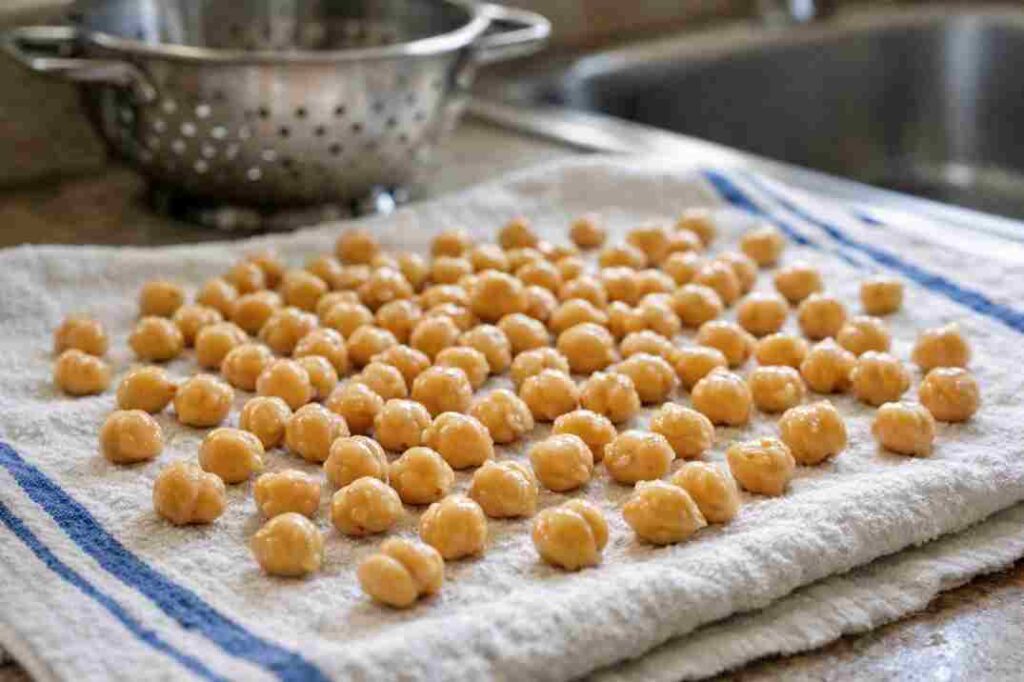
I always begin with the chickpeas because they’re the base of the whole salad.
If I’m using canned chickpeas (which I usually am), I rinse them really well under cold water. Not a quick rinse — I mean until the water runs completely clear. That canned liquid can leave a weird taste if you don’t wash it off properly.
After rinsing, I drain them and then spread them out on a clean kitchen towel or paper towels. I gently pat them dry and let them sit for a few minutes. This step is easy to skip, but every time I do, I regret it. Wet chickpeas = watery salad.
Once they’re mostly dry, I add them to a large mixing bowl and sprinkle with a small pinch of salt. Nothing heavy yet — this is just the first layer of seasoning.
2. Prep the vegetables with intention, not perfection
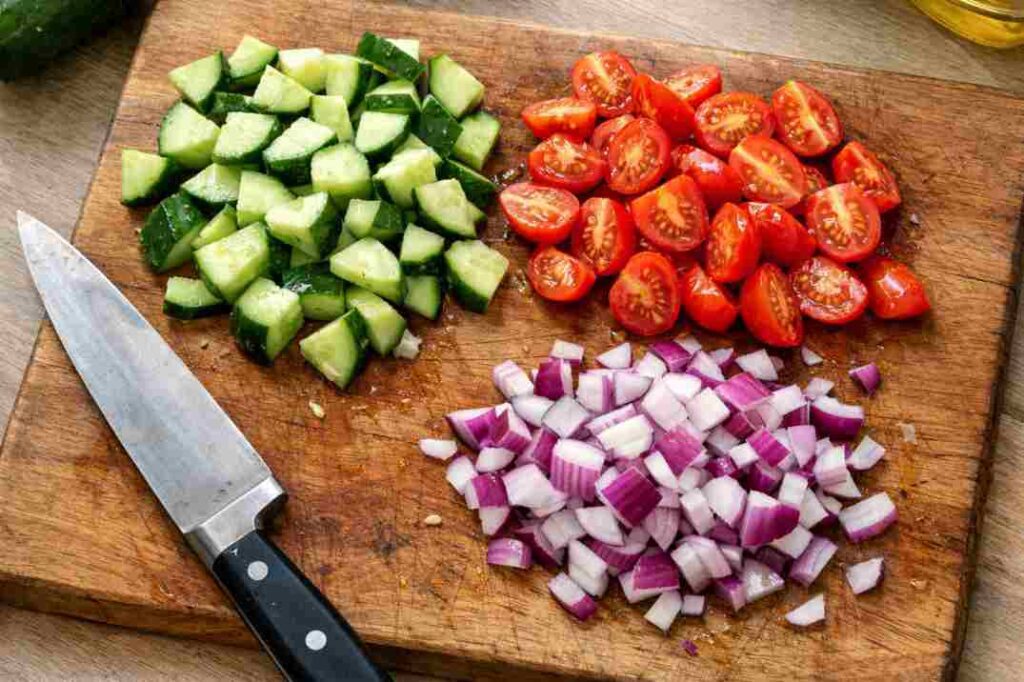
While the chickpeas sit, I move on to the vegetables.
I dice the cucumber into small, bite-sized pieces. If the cucumber has a lot of seeds, sometimes I’ll scoop a few out so the salad doesn’t get soggy later. Cherry tomatoes get sliced in half or quarters, depending on their size.
For the red onion, I keep it very fine. Big chunks of onion can overpower everything else. If the onion smells especially sharp, I soak it in a bowl of cold water for about 5 minutes, then drain and pat it dry. This takes away the harsh bite without losing flavor.
I don’t stress about perfect knife cuts here. I just aim for everything being roughly the same size so each bite tastes balanced.
3. Chop herbs last so they stay fresh
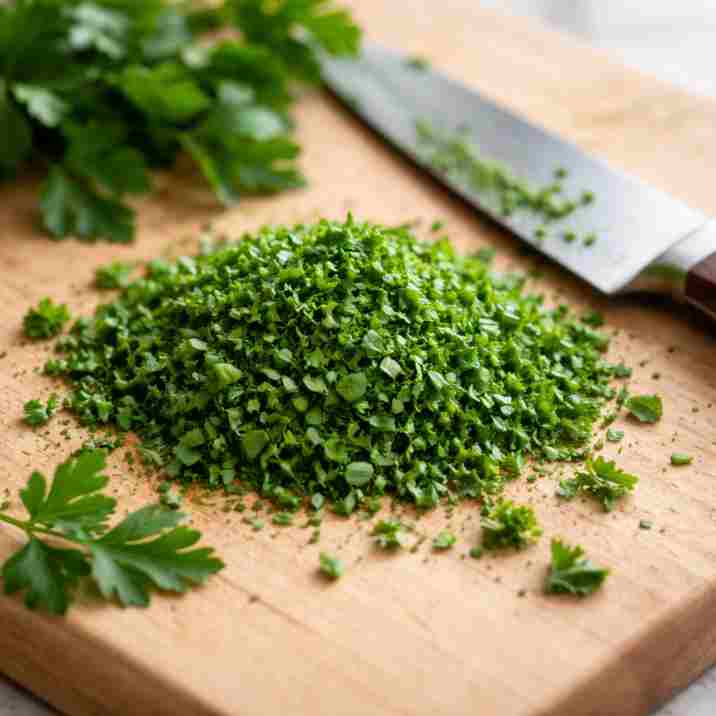
I always leave the herbs for last.
Fresh parsley is my default, and I chop it fairly fine but not into dust. You want it noticeable, not mushy. If I’m adding mint, I use less than parsley and slice it gently instead of chopping aggressively.
Fresh herbs can bruise easily, so I don’t toss them around yet. I just set them aside until the very end.
4. Mix the dressing separately (don’t skip this)
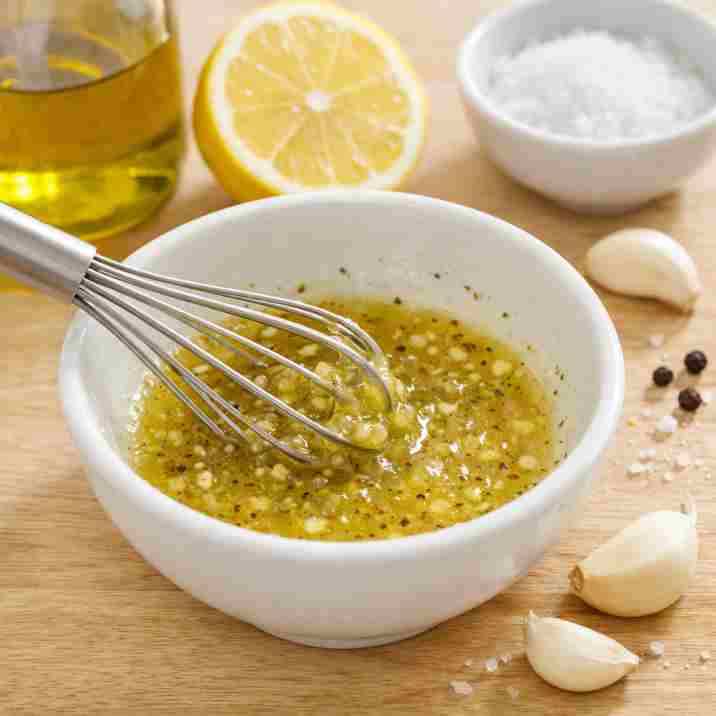
This is one habit that completely changed my chickpea salads.
Instead of pouring oil and lemon directly into the bowl, I whisk the dressing in a small bowl first. I add the olive oil, lemon juice, garlic, salt, and pepper, then whisk until it looks slightly emulsified — almost creamy.
I taste it every single time. Some lemons are more acidic than others, and tomatoes can be sweeter or sharper depending on the season. If it tastes flat, I add a pinch more salt. If it’s too sharp, I add a little more olive oil.
Getting the dressing right before it hits the salad makes everything more balanced.
5. Bring everything together gently
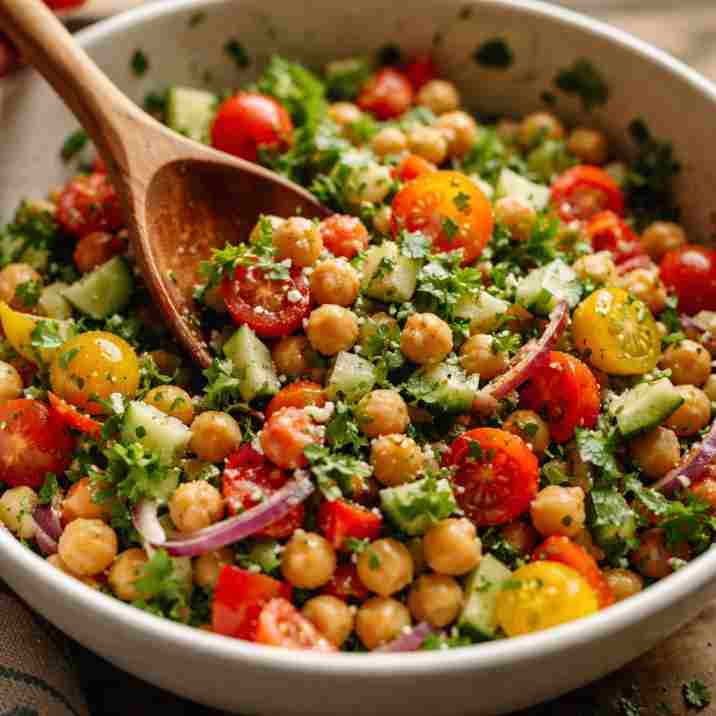
Now comes the easy part.
I add the chopped vegetables to the bowl with the chickpeas, then sprinkle the herbs over the top. I pour the dressing evenly across everything and toss gently with a large spoon or spatula.
I don’t rush this. I fold instead of stir so the chickpeas stay intact and the vegetables don’t get smashed.
Once it’s mixed, I stop and taste again. This is where I usually make final adjustments — a pinch more salt, a squeeze of lemon, or a drizzle of olive oil if it needs it.
6. Let it sit (if you can)
If I have the time, I let the salad sit at room temperature for about 15–20 minutes before eating. This gives the chickpeas time to absorb some of the dressing and lets the flavors settle into each other.
If I’m meal prepping, I actually like letting it chill in the fridge for a few hours before packing it away. It always tastes more cohesive later than it does right after mixing.
This step isn’t required — but it’s one of those small things that makes the salad taste like you really know what you’re doing, even if it only took you 15 minutes to make.
How to Make Chickpeas Taste Better (What I Learned Over Time)
Early on, my chickpea salads were bland. What I learned:
- Rinse canned chickpeas really well
- Dry them properly
- Season in layers, not just at the end
- Let the salad sit so flavors can settle
One big mistake I used to make was skipping salt early and trying to fix it later. That never works as well.
Texture & Flavor Tips
- Balance acid and fat — too much lemon makes it sharp, too much oil makes it heavy
- Add herbs last so they stay fresh
- Don’t overdress — you can always add more
Variations I Actually Use
Protein-boosted: add grilled chicken or tuna
Grain-added: mix in cooked quinoa or farro
Low-carb: skip grains and add more cucumber and herbs
Vegan-friendly: keep it simple with olives instead of cheese
Want a Mediterranean Meal Plan Made Just for You?
Recipes like this Mediterranean chickpea salad are a great place to start, especially if you’re easing into Mediterranean-style eating. I’ve always liked building meals one recipe at a time, but I also know that not everyone enjoys figuring things out as they go.
When I first started eating this way more regularly, the hardest part wasn’t cooking — it was deciding what to make every day. Some weeks I felt organized, other weeks I stared at the fridge with no plan at all. That’s usually when takeout sneaks back in.
Having a simple structure can make a big difference, especially if you’re busy or new to this style of eating. A custom Mediterranean meal plan is created after a short quiz, so it’s built around your food preferences, schedule, and cooking comfort level. Nothing rigid, nothing extreme — just a clear idea of what meals could look like for you.
It takes a lot of the guesswork out of planning without taking away flexibility, which is something I’ve learned really matters long term.
👉 If you want a personalized Mediterranean meal plan created for you, you can take the quiz here.
How I Meal Prep This Chickpea Salad for the Week
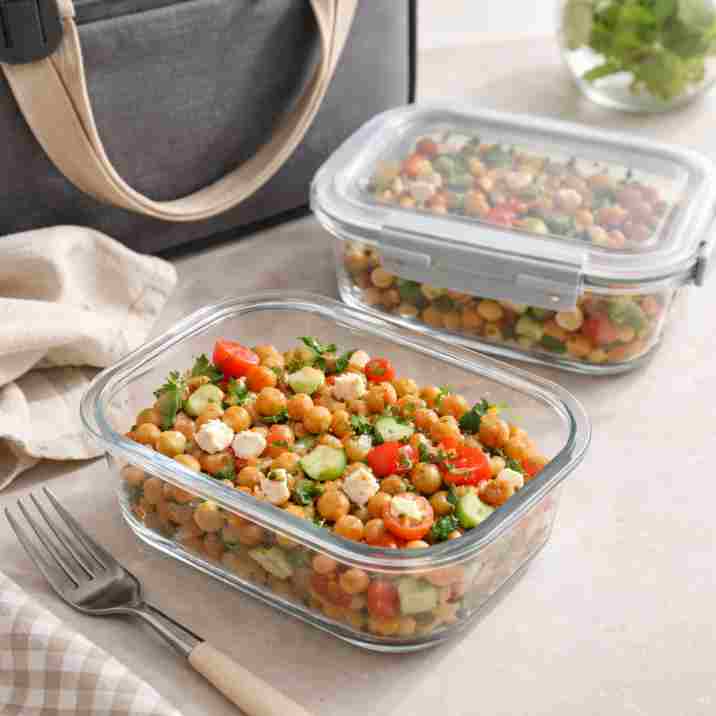
When I meal prep this chickpea salad, I keep things simple. I usually make a full batch and store it in an airtight glass container. It holds up well for about 3–4 days in the fridge, and honestly, I think it tastes better on day two.
If I know I’ll be eating it all week, I sometimes store the herbs separately and stir them in fresh each day. That keeps everything extra bright. If I’m short on time, I mix it all together and don’t stress about it.
For work lunches, I pack it as-is or pair it with some bread or leftovers protein. I don’t microwave it — I eat it cold or let it sit out for a few minutes. It’s one of the few salads that doesn’t turn sad after a day in the fridge.
Meals like this are what made Mediterranean-style eating feel realistic for me. Still, when I first started, I remember wishing I had a clear plan instead of figuring things out one meal at a time.
If you enjoy eating this way and want more structure, a custom Mediterranean meal plan can really help. You answer a short quiz, and the plan is built around your preferences, schedule, and goals — which takes a lot of the guesswork out of planning meals.
What I Serve with Mediterranean Chickpea Salad
Sometimes I eat this salad completely on its own, especially for lunch. It’s filling enough that I don’t feel like I’m missing anything.
For dinner, I’ll often pair it with grilled chicken, fish, or even roasted vegetables. It also works well next to simple things like roasted potatoes or warm pita bread.
If I’m serving it as a side, I keep the portions smaller and let it play a supporting role. It’s great at gatherings because it sits out well and doesn’t wilt immediately like leafy salads.
When I want to make it feel more like a full meal, I’ll add protein or grains directly to the salad. That way I’m not juggling multiple dishes.
Common Chickpea Salad Mistakes I Made (And What I Do Now)
I’ve made every mistake with chickpea salad.
I used to under-season because I was afraid of adding too much salt. Now I season gradually and taste often.
I’ve added way too much dressing and ended up with oily chickpeas. Now I start small and add more only if needed.
I skipped herbs thinking they were optional. They’re not. Even a small amount makes a big difference.
And I used to try to make it perfect — exact measurements, exact ingredients. Now I don’t. This salad is forgiving, and that’s why it works.
Wrap Up…
Chickpea salads don’t need to be complicated to be good. A few fresh ingredients, decent olive oil, and a little attention to seasoning go a long way.
This Mediterranean chickpea salad is one of those meals I keep coming back to because it’s easy, fresh, and actually filling. It fits into busy weeks, lazy weekends, and everything in between.
If you’re just starting out with Mediterranean-style eating, this is a great place to begin. Make it once, then make it your own. That’s how it sticks.