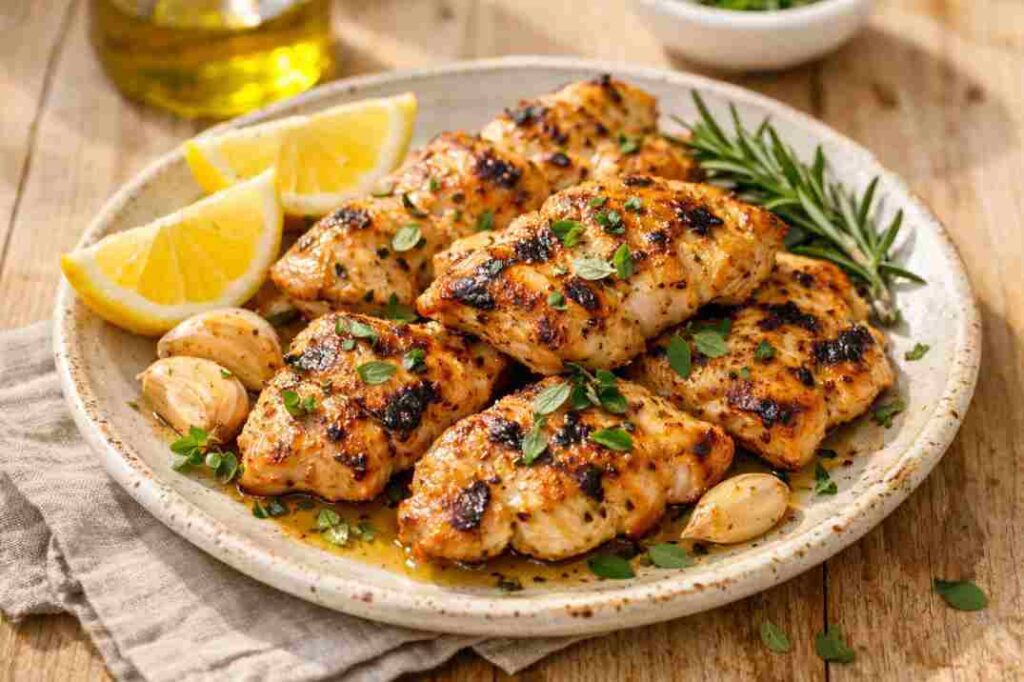
Chicken gets dry so easily. I’ve ruined more chicken breasts than I’d like to admit, especially back when I thought “just cook it less” was the answer. Turns out, the real fix starts way before the chicken ever hits the pan or grill.
Marinades make a huge difference, but only when they’re balanced. Too much acid and the chicken turns weird and tough. Not enough fat and it dries out anyway. I’ve tried a lot of marinades over the years, and this is the one I keep coming back to.
This is the mediterranean chicken marinade I use when I don’t want to think too hard and I definitely don’t want dry chicken. It’s simple, flexible, and made with things I already have. No fancy steps. No overnight stress if I forget. It just works, and that’s why it stays in my regular rotation.
Why Mediterranean Marinades Work So Well
Mediterranean-style marinades work because they don’t try to do too much. That’s honestly the biggest reason. They rely on a few solid ingredients that each have a job, and they don’t fight each other.
Olive oil is the base, and it matters more than people think. It coats the chicken and protects it from drying out while it cooks. I used to skimp on oil because I thought less was better. It wasn’t. The chicken always came out dry and bland. Once I stopped being afraid of olive oil, everything improved.
Then there’s acid. Usually lemon juice, sometimes vinegar. The acid lightly tenderizes the chicken and adds brightness, but Mediterranean marinades don’t drown the meat in it. That balance is key. Too much acid for too long turns chicken mushy, and I’ve learned that the hard way.
Herbs and garlic do most of the flavor work. Oregano, thyme, rosemary, parsley — nothing complicated. These are flavors that soak in without overpowering the chicken. Garlic adds depth, especially when it’s fresh.
What I love most is how forgiving these marinades are. You can adjust them without ruining anything. Forget one herb? It’s fine. Swap lemon for vinegar? Still good. Mediterranean chicken marinades are practical, and that’s why they’re so reliable for everyday cooking.
Simple Ingredients I Always Use (And Why Each One Matters)
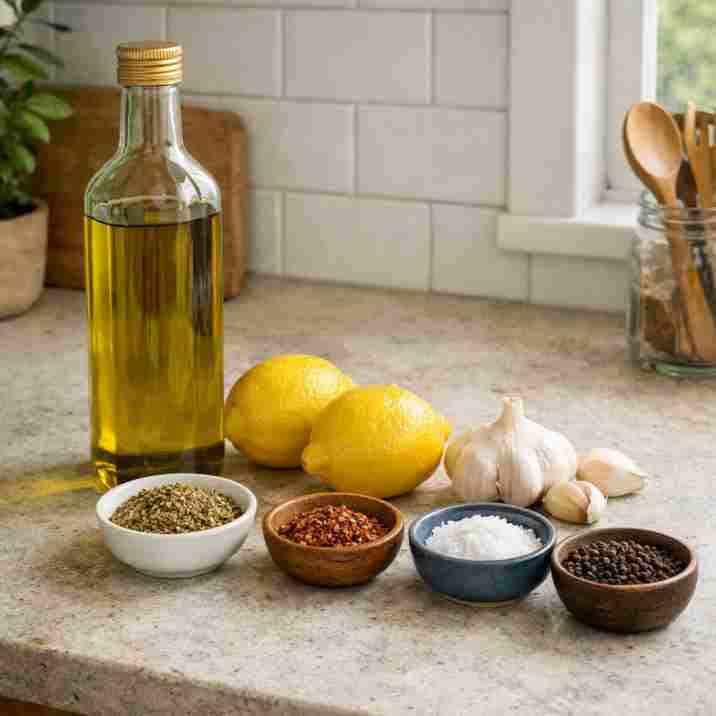
I don’t overcomplicate this marinade. Everything in it has a purpose, and every ingredient is something I always have on hand.
Olive oil
This is the foundation. I use it generously because it keeps the chicken juicy and helps the herbs stick. It also helps the chicken brown better when cooking. When I’ve tried cutting back, the chicken always suffered.
Lemon juice or vinegar
Most of the time I use fresh lemon juice. Sometimes red wine vinegar if that’s what I have. The acid adds brightness and helps tenderize the meat, but I keep it balanced. This is not a lemon sauce. It’s just enough to wake everything up.
Garlic
Fresh garlic makes a difference here. I usually mince it pretty finely so it distributes evenly. If I’m in a rush, I’ll use garlic powder, but fresh is better when I can.
Dried or fresh herbs
Oregano is my go-to. I almost always add thyme, and sometimes rosemary if I’m grilling. Fresh herbs are great, but dried ones work perfectly for a marinade and are honestly more realistic for weeknight cooking.
Salt and seasoning
Salt is non-negotiable. I used to forget it, assuming the marinade would somehow season the chicken on its own. It doesn’t. Salt helps the chicken absorb flavor and stay juicy. I’ll sometimes add black pepper or a pinch of paprika, but I keep it simple.
These ingredients are always in my kitchen, and that’s part of why this marinade gets used so often.
The Recipe: Easy Mediterranean Chicken Marinade

This marinade tastes bright, herby, and savory without being overpowering. The chicken still tastes like chicken, just better. I use it when I’m grilling for guests, cooking a quick dinner, or prepping chicken for the week.
What I love most is how flexible it is. It works with chicken breasts, thighs, drumsticks — even chicken tenders. It also holds up across different cooking methods, which makes it practical for real life.
It’s not fancy. It’s not trendy. It’s just a really solid mediterranean chicken marinade recipe that keeps chicken juicy and flavorful without stress.
Ingredients List
Core ingredients (this is my standard):
- ½ cup olive oil
- 3 tablespoons lemon juice or red wine vinegar
- 3–4 cloves garlic, minced
- 1½ teaspoons dried oregano
- 1 teaspoon dried thyme
- 1 teaspoon salt
- ½ teaspoon black pepper
Optional add-ins I actually use:
- A pinch of paprika for warmth
- Lemon zest if I want extra brightness
- A small splash of white wine vinegar for sharper flavor
Substitutions I use all the time:
- No lemon? Use vinegar.
- No fresh garlic? Garlic powder works in a pinch.
- Fresh herbs instead of dried? Use about 3x the amount.
I don’t stress about exact measurements anymore. Once you make this a few times, you’ll adjust naturally.
Step-by-Step Instructions
This is where most marinades either work beautifully or completely fall apart. I used to think marinades were foolproof — mix, pour, wait, cook. Turns out, the small steps matter more than the recipe itself. This is exactly how I do it now, every time.
Step 1: Mix the Marinade Properly (Don’t Rush This)
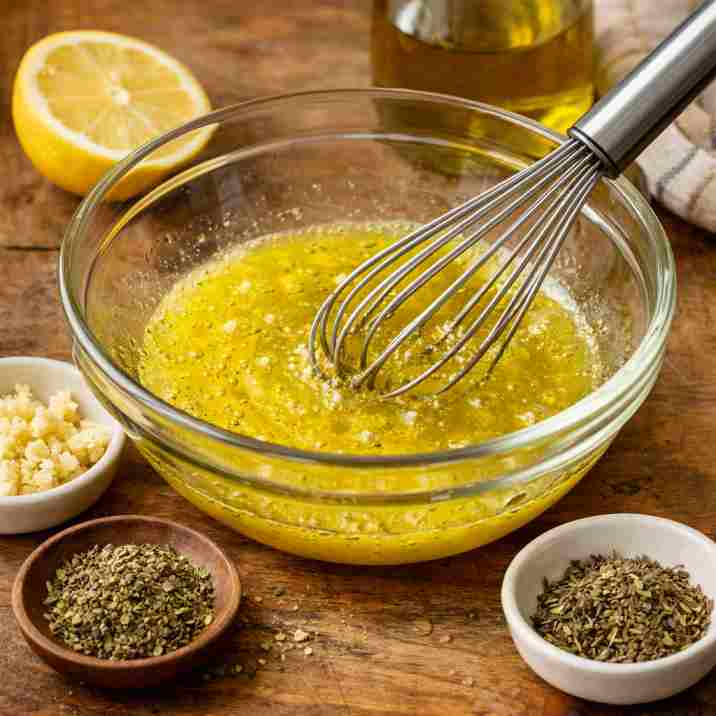
I always start with a bowl big enough to whisk comfortably. First goes the olive oil, then the lemon juice (or vinegar). I whisk those two together before adding anything else. This helps the marinade come together instead of separating later and leaving the chicken unevenly coated.
Once that’s combined, I add the garlic, herbs, salt, and pepper. If I’m using any extras — paprika, lemon zest, red pepper flakes — they go in now.
I always taste the marinade at this point. Not a tiny taste — a real one. It should taste slightly salty and more intense than you’d want to drink. That’s normal. Marinade flavor gets diluted once it hits the chicken, so if it tastes bland in the bowl, it will be bland on the plate.
If it tastes harsh or sharp, I add a little more olive oil. If it tastes flat, it usually needs salt.
Step 2: Prepare the Chicken

Before the chicken touches the marinade, I pat it dry with paper towels. I skipped this step for years and didn’t realize how much it mattered. Drying the surface helps the marinade cling instead of sliding right off.
If I’m using chicken breasts and they’re thick on one side, I lightly pound them so they’re more even. I don’t flatten them completely — just enough so they’ll cook evenly. Uneven thickness is one of the biggest reasons chicken dries out.
I also trim off any excess fat or weird bits. Not because it has to look perfect, but because those parts don’t absorb marinade well and tend to cook oddly.
Step 3: Combine Chicken and Marinade (Coverage Matters)
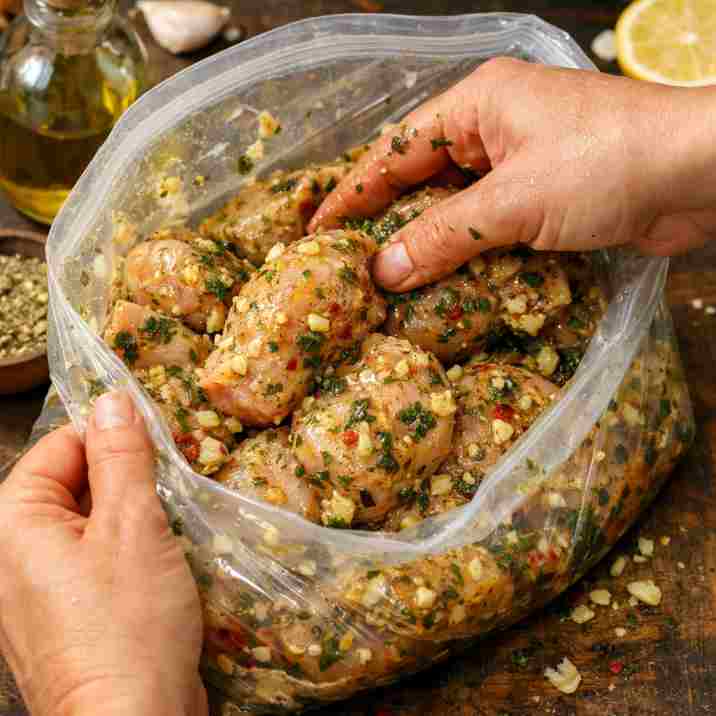
I usually use a zip-top bag for this, mostly because it makes cleanup easier. A bowl works fine too.
I add the chicken first, then pour the marinade over it. I make sure every piece is coated, turning them a few times with my hands or tongs. I don’t just dump it in and hope for the best.
Once everything is coated, I press out as much air as possible if I’m using a bag. This keeps the marinade in contact with the chicken instead of pooling at the bottom.
Step 4: Marinate for the Right Amount of Time
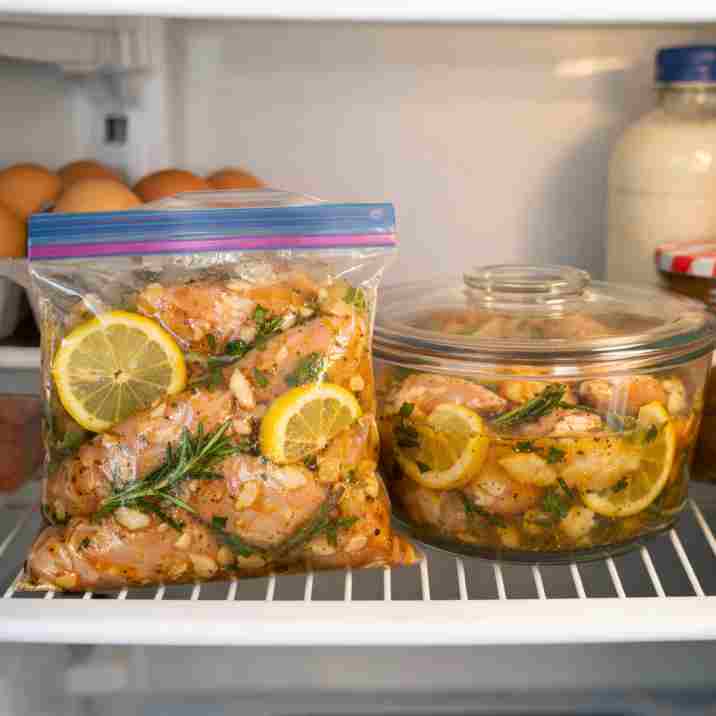
I put the chicken in the fridge right away. Room temperature marinating sounds nice in theory, but it’s not something I do.
- Minimum: 30 minutes
- Sweet spot: 2–4 hours
- Maximum (for breasts): about 6 hours
If I’m using thighs, I’m less strict. They’re forgiving and can handle longer marinating times without turning mushy.
I used to think longer was always better. It’s not. With lemon-based marinades especially, too much time can mess with the texture. If I know I won’t cook the chicken within a few hours, I’ll reduce the acid slightly.
Step 5: Bring Chicken Closer to Room Temperature Before Cooking

About 15 minutes before cooking, I take the chicken out of the fridge. Cold chicken straight into a hot pan or grill cooks unevenly. The outside overcooks before the inside catches up.
I don’t leave it out for long — just enough to take the chill off. This one small habit helped me get more consistent results.
Step 6: Shake Off Excess Marinade (Especially for High Heat)
Right before cooking, I let excess marinade drip off. I don’t wipe it completely clean, but I don’t want it dripping either.
Too much marinade can cause burning, especially on the grill or in the air fryer. The flavor is already in the chicken at this point. You don’t need all the liquid clinging to it.
Step 7: Cook and Don’t Overthink It

Once the chicken is cooking, I try not to fuss with it. Constant flipping dries it out. I let it cook, flip once, and trust the process.
I use a thermometer now, and I wish I’d started sooner. Pulling the chicken right when it’s done instead of guessing made a huge difference in juiciness.
Step 8: Rest the Chicken (Yes, Even for Weeknight Meals)
This is the step I skipped for years because I was hungry. Letting the chicken rest for even 5 minutes makes a noticeable difference. The juices redistribute instead of spilling out onto the cutting board.
Now I use that time to throw together a salad or clean up. Totally worth it.
How Long to Marinate Chicken (What I Learned the Hard Way)
Chicken breasts are delicate. They don’t like long acid baths. I used to marinate them overnight and wonder why they felt rubbery. Now I keep breasts to 2–4 hours max.
Chicken thighs are more forgiving. I’ve left them overnight plenty of times without issues. They stay juicy and flavorful.
Short marinades still work. Even 30 minutes makes a difference. What doesn’t work is over-marinating in too much acid. That’s where texture problems happen.
Best Cooking Methods for This Marinade
Grilling
This is my favorite. The oil helps prevent sticking, and the herbs get slightly charred. I grill over medium heat and don’t move the chicken too much.
Baking
I bake at 400°F and use a baking dish so the marinade stays close. Covering loosely for the first half helps keep it juicy.
Pan-searing
Great for weeknights. I let the chicken cook undisturbed so it browns properly.
Air fryer
This one surprised me. It works really well. I just shake off excess marinade so it doesn’t burn.
Want a Mediterranean Meal Plan Made Just for You?
Recipes like this marinade are honestly where Mediterranean-style cooking finally clicked for me. Simple flavors, flexible meals, nothing fussy. But I’ll be real — when I first started eating this way, I still felt a bit scattered. I’d make one good recipe, enjoy it, and then stare at the fridge the next day wondering what to cook next.
That’s where having a bigger plan can help, especially if you’re new to Mediterranean-style eating or just tired of making decisions every single day. A custom Mediterranean meal plan takes the guesswork out of it. Instead of piecing things together meal by meal, everything is laid out based on your preferences, schedule, and the kinds of foods you actually enjoy eating.
I like that it’s not a rigid plan that expects perfection. It’s built to work with real life — busy weeks, leftovers, simple meals, and repeat recipes like this marinade that you can use in different ways.
If you enjoy flavors like this and want a more organized approach without overthinking it, having a personalized plan can make everything feel a lot more manageable.
👉 If you want a personalized Mediterranean meal plan created for you, you can take the quiz here.
How to Keep Chicken Juicy Every Time
Resting the chicken matters. I ignored this for years. Letting it rest for 5 minutes keeps the juices inside.
Cooking temperature matters too. I used to crank the heat. Now I don’t. Medium heat and patience win every time.
Mistakes I used to make:
- Cooking straight from the fridge
- Overcooking “just to be safe”
- Skipping oil
Fixing those changed everything.
Variations I Actually Use
Lemon-heavy version
Extra lemon juice and zest. Great for salads.
Garlic-forward version
Double the garlic. Perfect for wraps.
Spicy version
Red pepper flakes or chili paste.
Yogurt-based Mediterranean marinade
I swap half the oil for plain yogurt when I want extra tenderness.
How I Use This Marinade Throughout the Week
I rarely make this just for one meal. If I’m mixing it, I usually double it. Marinated chicken is one of those things that makes the week easier without feeling like meal prep torture.
I’ll grill or bake a big batch on Sunday, then use it in different ways. Sliced over salads with cucumbers and tomatoes. Stuffed into wraps with hummus. Thrown into grain bowls. Sometimes I just eat it cold straight from the fridge, and I’m not ashamed of that.
Leftovers hold up really well because the chicken stays juicy. I’ll reheat gently or just bring it to room temperature. The flavor actually gets better after a day.
Cooking this way is what made Mediterranean-style eating feel realistic for me. That said, when I first started, I still wished I had a bigger plan instead of figuring things out meal by meal.
If you enjoy eating this way and want more structure, a custom Mediterranean meal plan can really help. You answer a short quiz, and the plan is built around your preferences, schedule, and goals, which takes a lot of the guesswork out of planning meals.
Common Chicken Marinade Mistakes I’ve Made
I’ve made all of them. Truly.
I’ve marinated chicken too long and ruined the texture. I’ve skipped salt because I thought the marinade would magically season everything. It didn’t.
I’ve gone heavy on lemon juice thinking more flavor was better. It wasn’t. Balance matters.
I’ve cooked chicken over high heat because I was impatient. That’s how you get dry outsides and raw centers.
Most of these mistakes came from trying too hard. Once I simplified things and trusted the process, my chicken improved instantly. Marinades don’t need to be complicated. They just need to be balanced.
Wrap Up
Marinades don’t need to be complicated to work. This mediterranean chicken marinade proves that to me every single time I make it. Simple ingredients. Reasonable marinating time. No stress.
This is the marinade I come back to because it just works. It keeps chicken juicy, adds real flavor, and fits into normal, busy cooking. If you’ve struggled with dry chicken before, start here. One good marinade can change how you feel about cooking chicken entirely.
Make it once. Adjust it to your taste. And keep it in your back pocket for the nights when you want something reliable and good without overthinking it.