For a long time, the phrase diabetes-friendly food honestly made me cringe a little. It sounded bland. Sad. Like something I’d have to cook separately from everyone else in the house. I didn’t want food that felt like diet food, and I definitely didn’t want a fridge full of meals I forced myself to eat just because I thought I “should.”
What I really wanted was normal food. Meals I could cook on a random Tuesday. Stuff I wouldn’t get bored of after two weeks. Recipes I could repeat without thinking too hard.
Over time, I figured out which meals actually worked better for my blood sugar without turning my kitchen into a rule-filled zone. These are the diabetes friendly recipes I actually make during the week — not perfect, not fancy, just realistic. The kind of food you cook when you’re tired, hungry, and want something that feels satisfying and familiar.
Ingredients I Rely On for Everyday Diabetes-Friendly Cooking
I rotate the same basic ingredients week after week, and honestly, that’s what makes cooking easier. I’m not reinventing meals all the time. I just mix and match what I already know works.
Proteins I use constantly:
Eggs, chicken thighs, ground turkey, salmon, tofu, Greek yogurt, canned tuna, beans, and lentils. These are affordable, easy to cook, and make meals feel complete.
Vegetables I actually buy:
Bell peppers, onions, spinach, zucchini, broccoli, cauliflower, carrots, tomatoes, cucumbers, and frozen veggies for backup nights. I’m not trying to cook obscure vegetables I won’t use again.
Carbs I don’t avoid:
Brown rice, quinoa, oats, whole-grain bread, sweet potatoes, chickpeas, and black beans. I just pair them with protein and fat so they feel balanced instead of overwhelming.
Healthy fats I lean on:
Olive oil, avocado, nuts, seeds, and nut butters. These make meals taste better and help me stay full longer.
Pantry staples that save me:
Garlic, spices, canned tomatoes, soy sauce, mustard, vinegar, lemon juice, and frozen herbs. Nothing fancy, just things that add flavor fast.
These ingredients make meals easier, not stricter. I keep them on hand so I don’t have to overthink dinner every night.
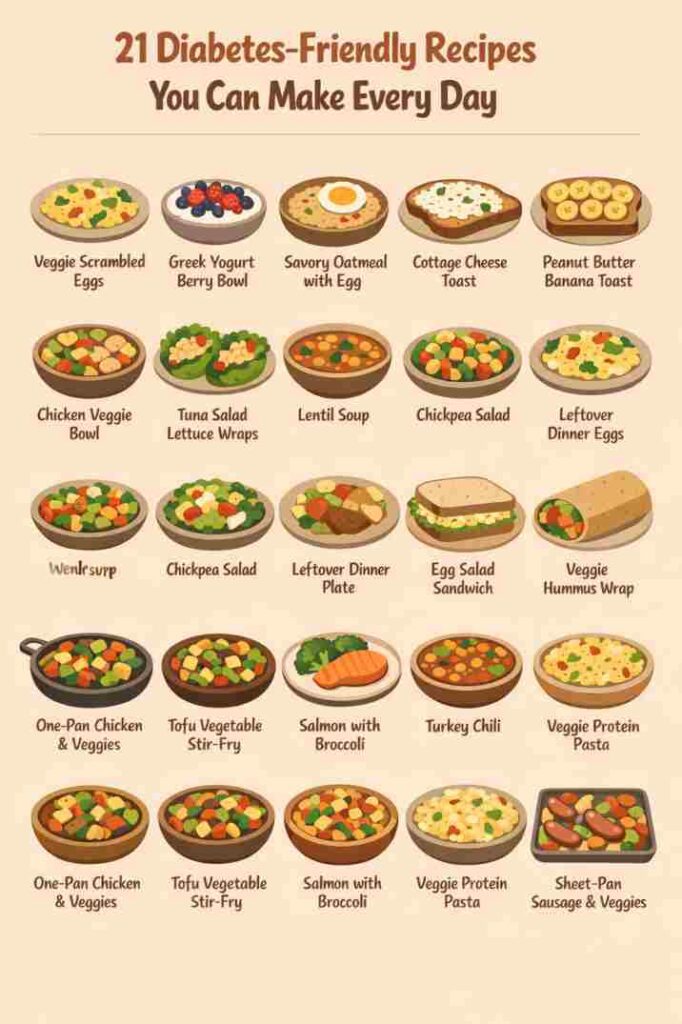
21 Diabetes-Friendly Recipes
1. Veggie Scrambled Eggs with Toast
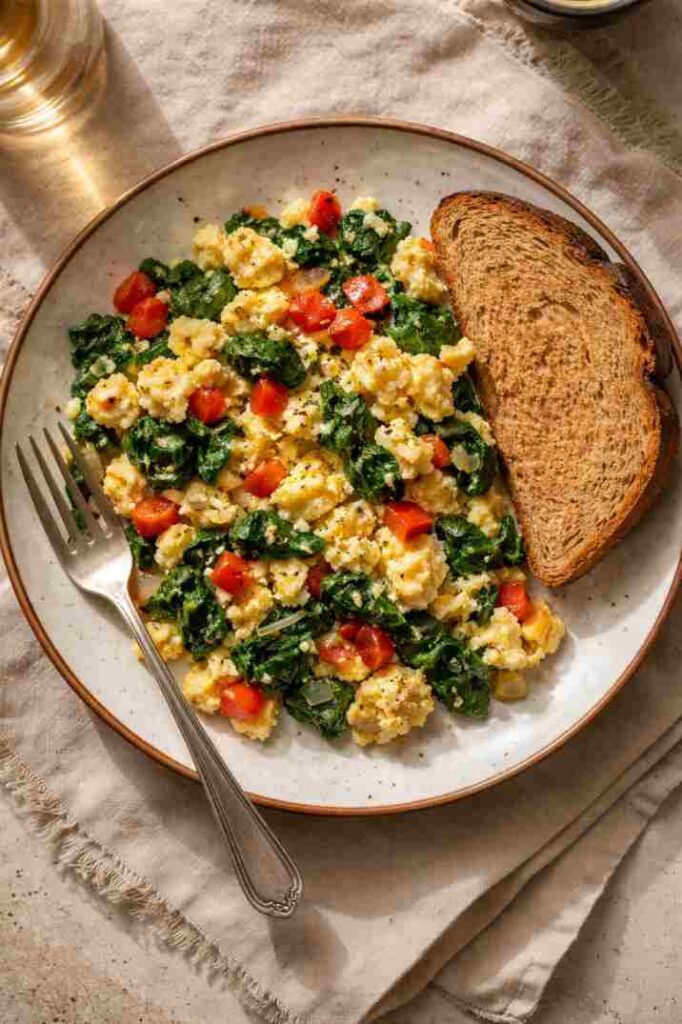
I make this on mornings when I want something warm and filling. The eggs and veggies keep me full, and the toast makes it feel like a real breakfast. It’s simple, comforting, and takes about 10 minutes. Leftovers reheat fine if I double it.
Ingredients
- Eggs
- Spinach
- Bell peppers
- Onion
- Olive oil
- Whole-grain toast
Steps
- Heat oil in a pan.
- Sauté veggies until soft.
- Add beaten eggs.
- Stir gently until set.
- Serve with toast.
Tip: Add feta if you want more flavor without extra effort.
2. Greek Yogurt Berry Bowl
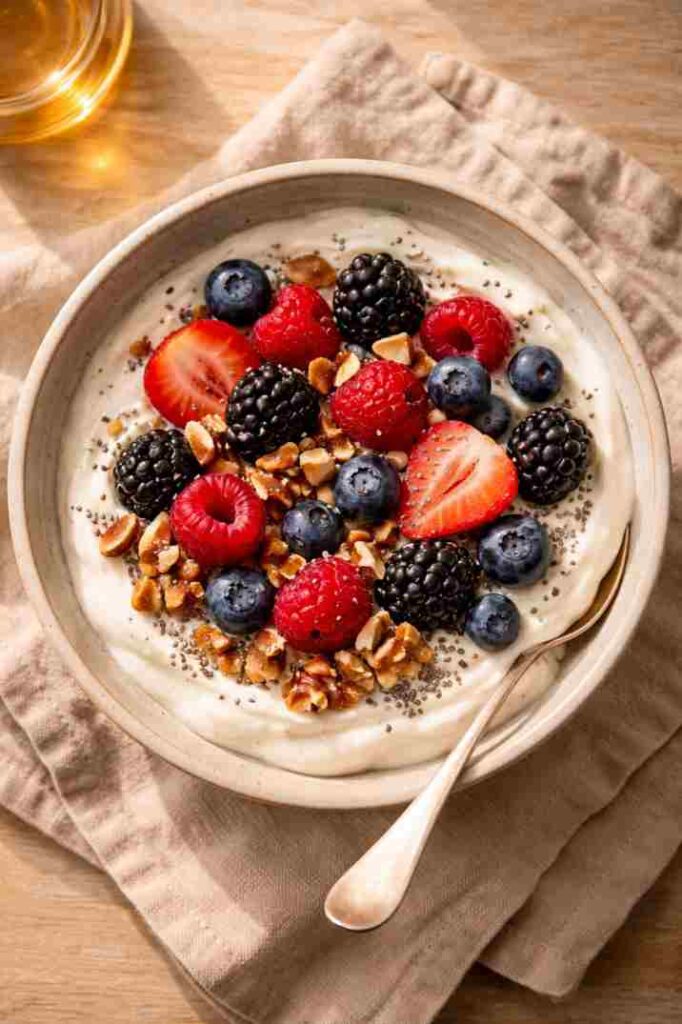
This is my lazy breakfast when I don’t feel like cooking. It’s creamy, lightly sweet, and surprisingly filling. I usually make it in under five minutes.
Ingredients
- Plain Greek yogurt
- Berries
- Chopped nuts
- Chia seeds
Steps
- Scoop yogurt into a bowl.
- Add berries.
- Sprinkle nuts and seeds.
- Stir and eat.
Tip: Frozen berries work just as well.
3. Savory Oatmeal with Egg
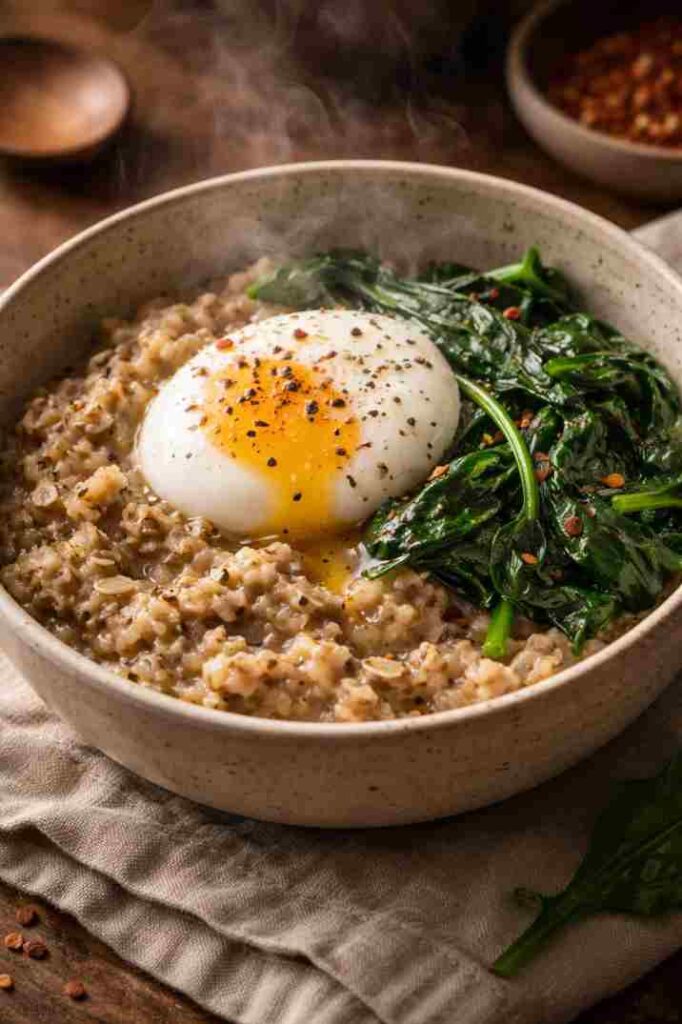
I didn’t think I’d like savory oatmeal, but now it’s in my regular rotation. It’s warm, comforting, and doesn’t leave me hungry.
Ingredients
- Oats
- Egg
- Spinach
- Salt and pepper
Steps
- Cook oats in water.
- Stir in spinach.
- Top with a fried or soft-boiled egg.
- Season lightly.
Tip: Add a drizzle of olive oil for richness.
4. Cottage Cheese Toast
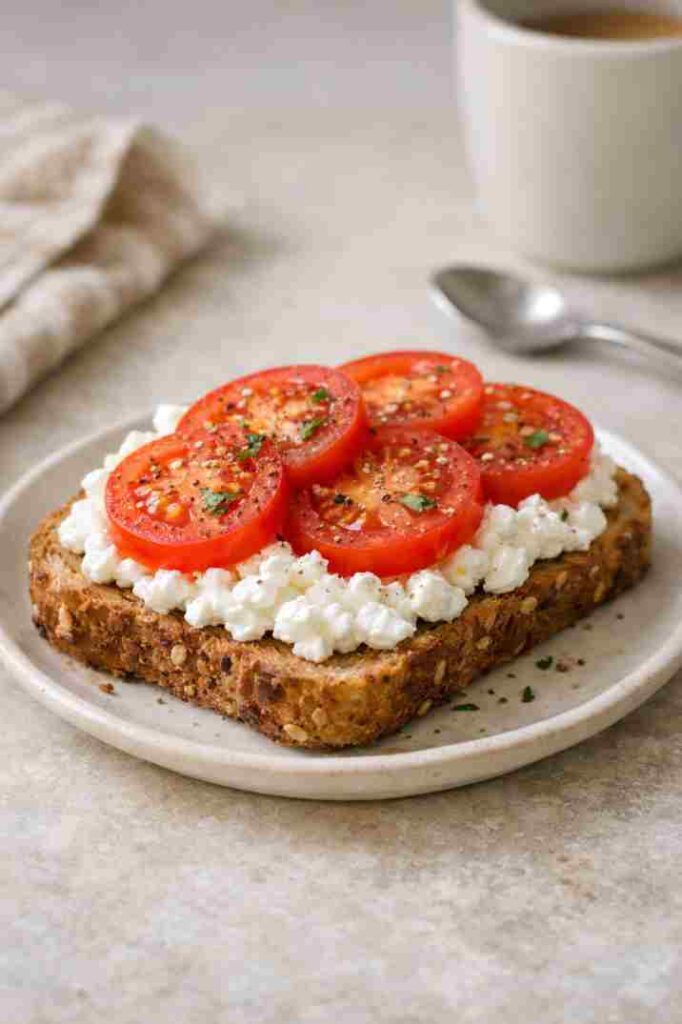
This feels light but keeps me full longer than expected. I make it when I want something quick but not sweet.
Ingredients
- Whole-grain bread
- Cottage cheese
- Tomato slices
- Olive oil
Steps
- Toast bread.
- Spread cottage cheese.
- Add tomatoes.
- Drizzle olive oil.
Tip: Sprinkle pepper or chili flakes.
5. Veggie Omelet
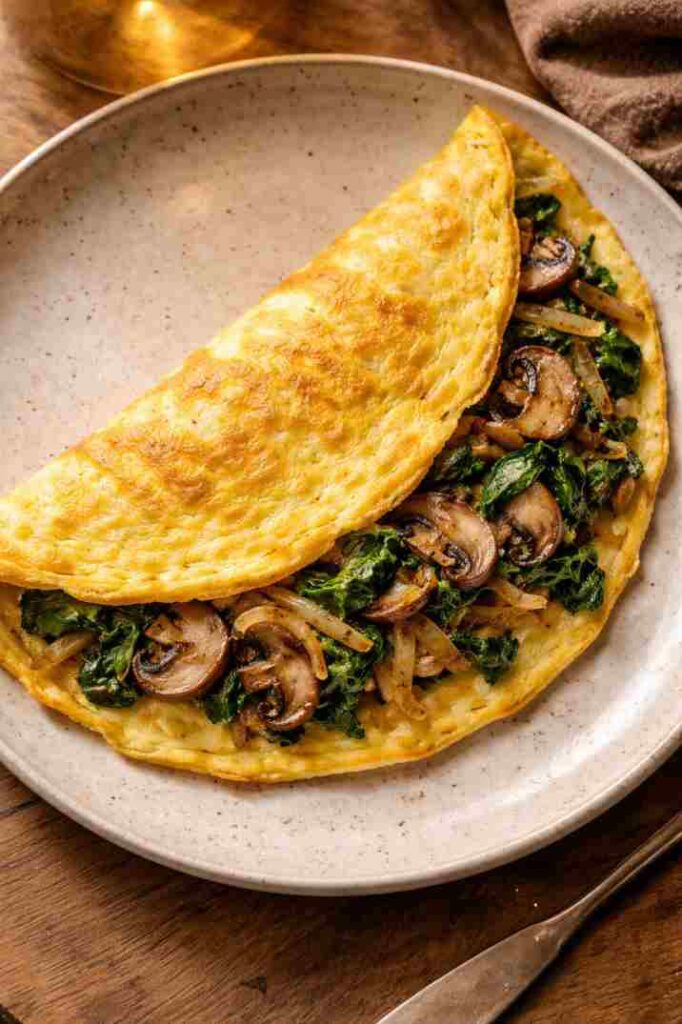
This is a weekend breakfast for me. It’s filling and reheats surprisingly well.
Ingredients
- Eggs
- Mushrooms
- Onions
- Spinach
Steps
- Cook veggies.
- Add beaten eggs.
- Fold gently.
- Cook until set.
Tip: Make two and save one.
6. Peanut Butter Banana Toast
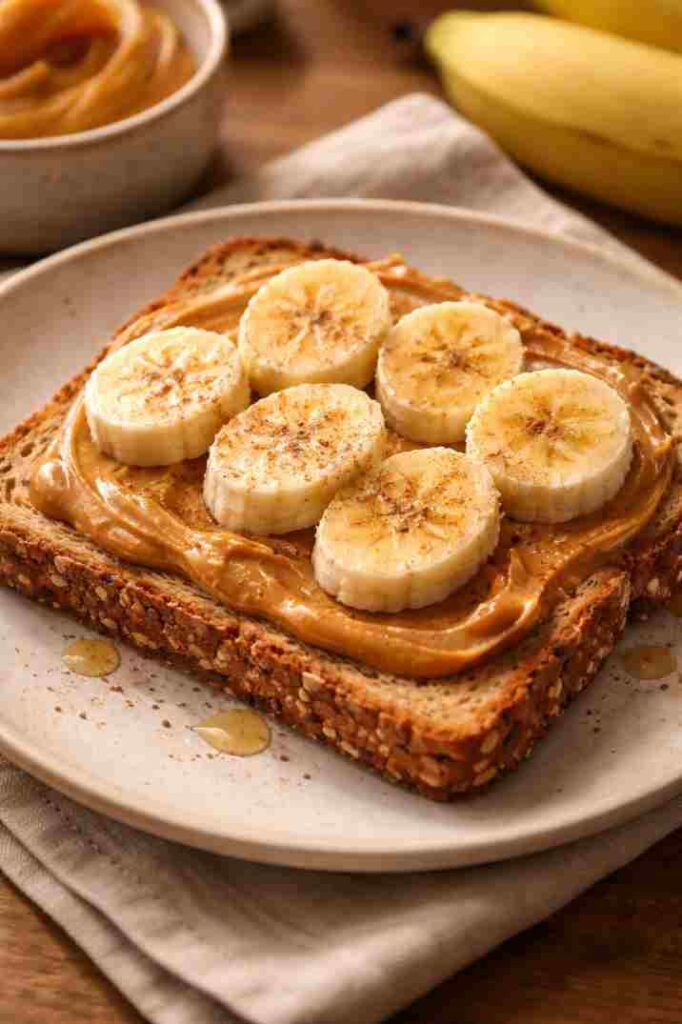
This feels indulgent but still works for me when paired right.
Ingredients
- Whole-grain bread
- Peanut butter
- Banana slices
Steps
- Toast bread.
- Spread peanut butter.
- Add banana slices.
Tip: Keep banana portions small and pair with coffee or tea.
7. Leftover Dinner Eggs
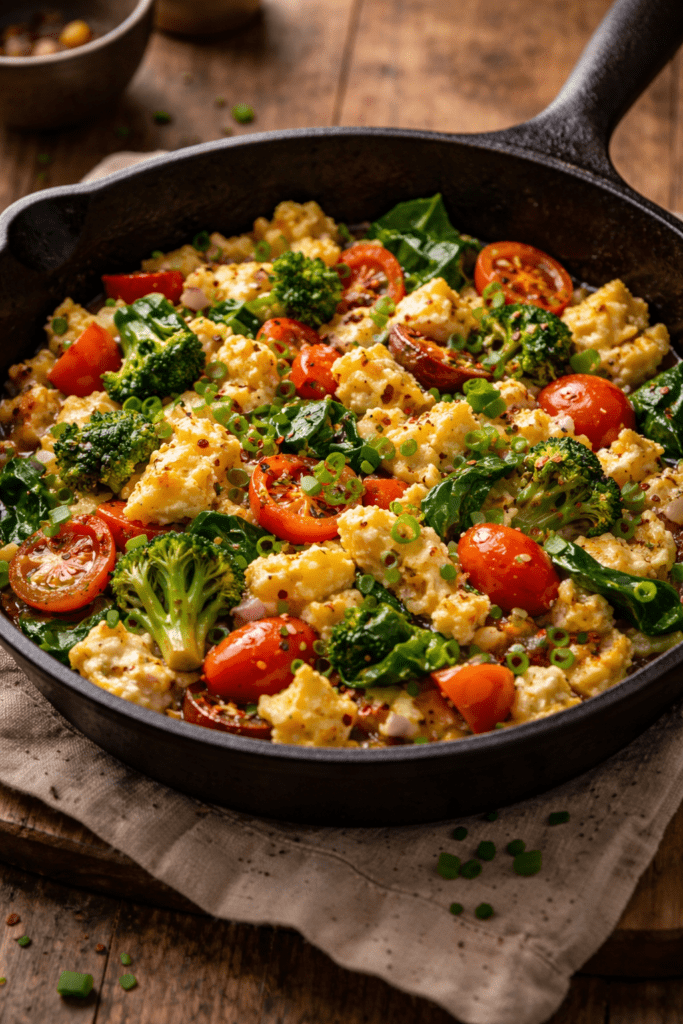
Sometimes breakfast is just eggs with leftover veggies or protein. It’s practical and satisfying.
Ingredients
- Eggs
- Leftover vegetables or meat
Steps
- Reheat leftovers.
- Add eggs.
- Cook together.
Tip: Breakfast doesn’t need to look like breakfast.
8. Chicken Veggie Bowl
This is my go-to meal prep lunch. It keeps well and tastes good even reheated.
Ingredients
- Cooked chicken
- Brown rice
- Roasted veggies
Steps
- Cook rice.
- Roast veggies.
- Add chicken.
- Assemble bowls.
Tip: Change the sauce to avoid boredom.
9. Tuna Salad Lettuce Wraps

Light but filling. I make this when I want something cold and quick.
Ingredients
- Canned tuna
- Greek yogurt or mayo
- Celery
- Lettuce
Steps
- Mix tuna and dressing.
- Add celery.
- Spoon into lettuce leaves.
Tip: Eat with crackers if you need more staying power.
10. Lentil Soup
This is cozy and great for leftovers. I often freeze portions.
Ingredients
- Lentils
- Carrots
- Onion
- Garlic
Steps
- Sauté veggies.
- Add lentils and water.
- Simmer until soft.
- Season lightly.
Tip: Add lemon at the end.
11. Chickpea Salad
Crunchy, fresh, and easy to throw together.
Ingredients
- Chickpeas
- Cucumber
- Tomato
- Olive oil
Steps
- Rinse chickpeas.
- Chop veggies.
- Toss everything together.
Tip: Keeps well for two days.
12. Leftover Dinner Plate
Sometimes lunch is just smaller portions of dinner. That’s fine.
Ingredients
- Leftover dinner
Steps
- Reheat.
- Eat.
Tip: Simple counts.
13. Egg Salad Sandwich
Comfort food that still feels balanced.
Ingredients
- Boiled eggs
- Yogurt or mayo
- Whole-grain bread
Steps
- Mash eggs.
- Mix dressing.
- Assemble sandwich.
Tip: Add mustard for flavor.
14. Veggie & Hummus Wrap
Fresh and easy when I don’t want to cook.
Ingredients
- Whole-grain wrap
- Hummus
- Veggies
Steps
- Spread hummus.
- Add veggies.
- Roll up.
Tip: Add leftover chicken if needed.
15. One-Pan Baked Chicken & Veggies
This saves me on busy nights. Everything cooks together.
Ingredients
- Chicken thighs
- Vegetables
- Olive oil
Steps
- Toss everything on a tray.
- Bake until cooked.
- Serve.
Tip: Line the pan for easy cleanup.
16. Stir-Fry with Tofu
Fast, flexible, and reheats well.
Ingredients
- Tofu
- Mixed vegetables
- Soy sauce
Steps
- Cook tofu.
- Add veggies.
- Stir in sauce.
- Serve.
Tip: Use frozen veggies when tired.
17. Salmon with Roasted Broccoli
Feels fancy but takes under 20 minutes.
Ingredients
- Salmon
- Broccoli
- Olive oil
Steps
- Roast broccoli.
- Bake salmon.
- Serve together.
Tip: Leftovers make great lunch.
18. Turkey Chili
Comfort food I can eat for days.
Ingredients
- Ground turkey
- Beans
- Tomatoes
Steps
- Brown turkey.
- Add beans and tomatoes.
- Simmer.
- Serve.
Tip: Freeze extra portions.
19. Veggie Pasta with Protein
I still eat pasta, just balanced.
Ingredients
- Whole-grain pasta
- Veggies
- Chicken or beans
Steps
- Cook pasta.
- Sauté veggies.
- Add protein.
- Toss together.
Tip: Keep pasta portions reasonable.
20. Simple Fried Rice
Great for using leftovers.
Ingredients
- Leftover rice
- Eggs
- Vegetables
Steps
- Heat pan.
- Add rice and veggies.
- Stir in eggs.
- Season lightly.
Tip: Cold rice works best.
21. Sheet-Pan Sausage & Veggies
This is comfort food without stress.
Ingredients
- Sausage
- Vegetables
- Olive oil
Steps
- Slice everything.
- Roast together.
- Serve.
Tip: Reheats surprisingly well.
How I Make These Recipes Work for Real Life
I don’t cook 21 different meals every week. Not even close. I repeat the same few recipes and rotate them depending on my mood. Some weeks are heavy on eggs and bowls. Other weeks are all soups and sheet-pan dinners.
I shop with a loose plan, not a strict list. I buy proteins I know I’ll use and vegetables that work across multiple meals. If I’m tired, I lean on frozen veggies and leftovers without guilt.
Portions are flexible. Some days I need more food, some days less. I don’t force myself to eat the same way every day.
This approach feels sustainable, and that matters more than doing everything perfectly.
Wrap UP…
These are the diabetes friendly recipes I come back to because they fit into real life. They don’t feel restrictive, complicated, or stressful. They’re just normal meals that happen to work better for me.
You don’t need to change everything at once. Start with one or two recipes. See how they feel. Build from there.
Everyday meals matter most — not perfect ones. And food doesn’t need to feel like a punishment to work.