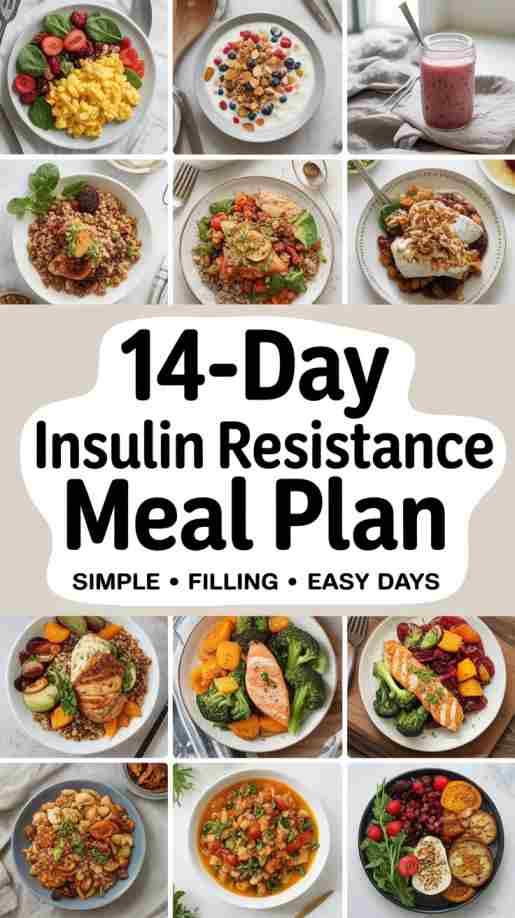
I used to think eating for insulin resistance meant I had to choose between two extremes. Either I followed a super strict plan that made food stressful… or I gave up and ate whatever was easiest, then wondered why my energy felt all over the place.
Every plan I found online felt intense. So many rules. So many “never eat this again” vibes. I didn’t want another plan that felt impossible to follow once real life kicked in.
What I needed was something simple. Meals that felt normal. Food that actually kept me full. A routine I could repeat without overthinking every bite.
This 14 day insulin resistance meal plan is the kind of structure I wish I had earlier. It’s not perfect. It’s not fancy. It’s built around meals I actually make when I’m tired, busy, or just don’t want to think too hard about food.
I’m not trying to eat “clean” every day. I just want meals that support steadier energy and feel doable long-term. This is the plan I can actually stick to.
How I Approach Eating for Insulin Resistance
For a long time, I thought I needed to understand everything about insulin resistance to eat “correctly.” That mindset made meals way more complicated than they needed to be.
What finally helped was simplifying how I think about food.
Instead of cutting entire food groups, I focus on pairing things better. If I’m having carbs, I don’t eat them alone. I add protein. I add some fat. That one shift made meals feel more filling and less like I was on a food rollercoaster.
I also stopped chasing restriction. Every time I tried to eat less and less, it backfired. I’d end up thinking about food all day, then overeating later. Now I focus on fullness instead of rules. I ask myself, “Will this keep me satisfied for a few hours?” If the answer is no, I adjust.
Consistency matters more to me than perfection. I eat similar breakfasts most days. I rotate a few lunches. Dinners are simple and repeat often. At first, that felt boring. Now it feels calming.
I don’t track. I don’t measure. Portions are based on how hungry I am that day. Some days I need more. Some days I don’t. I try to listen instead of forcing my body into a plan that doesn’t fit.
This approach isn’t about fixing anything overnight. It’s about building meals that feel steady, realistic, and supportive over time.
How This 14-Day Meal Plan Is Structured
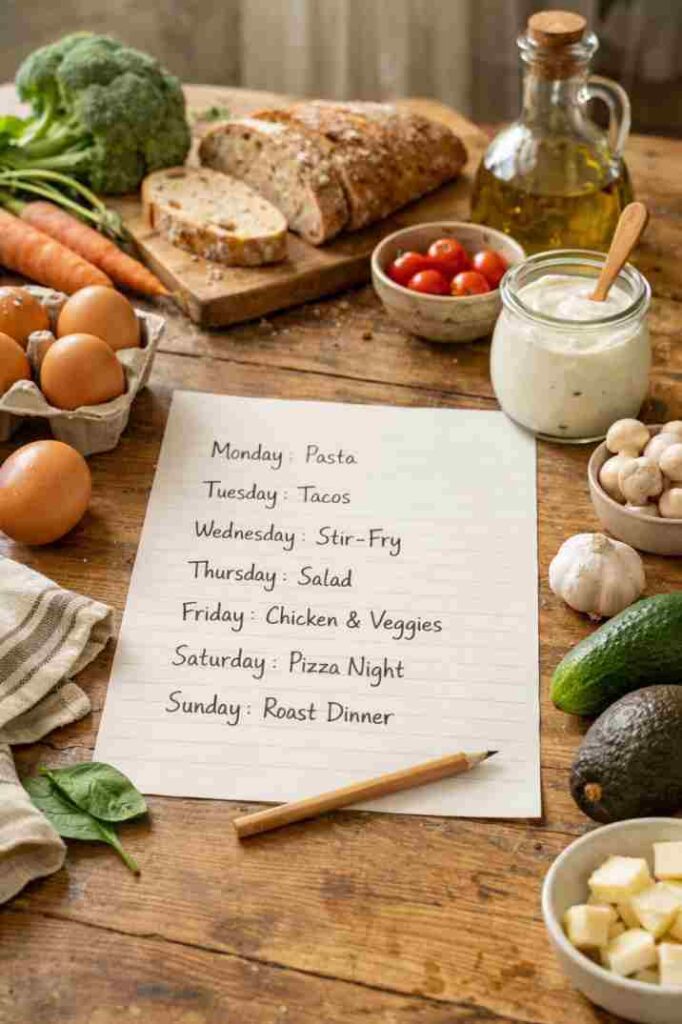
This 14 day insulin resistance meal plan is built around real life, not ideal days.
Each day includes:
- Breakfast
- Lunch
- Dinner
- An optional snack if I need it
I don’t believe snacks are mandatory. Some days I want one. Some days I don’t. I’ve learned to stop forcing them just because a plan says so.
Meals repeat on purpose. Repetition saves mental energy. When I know what I’m eating, I’m less likely to grab something random out of stress or exhaustion.
Breakfasts are quick and protein-focused. Lunches are usually leftovers or easy assembly meals. Dinners are simple, filling, and flexible enough to work for family meals too.
I leave room for swaps. If I don’t have a vegetable, I use another. If I’m tired of chicken, I use eggs or tofu. Nothing here is meant to be rigid.
Portions are intuitive. I build my plate with protein first, then add carbs and fats in a way that feels satisfying. No weighing. No tracking apps. Just paying attention.
This insulin resistance meal plan isn’t about eating perfectly for 14 days. It’s about creating a rhythm you can keep going after the two weeks are done.
The 14-Day Insulin Resistance Meal Plan
📅 Week 1: Days 1–7 (Ease-In Week)
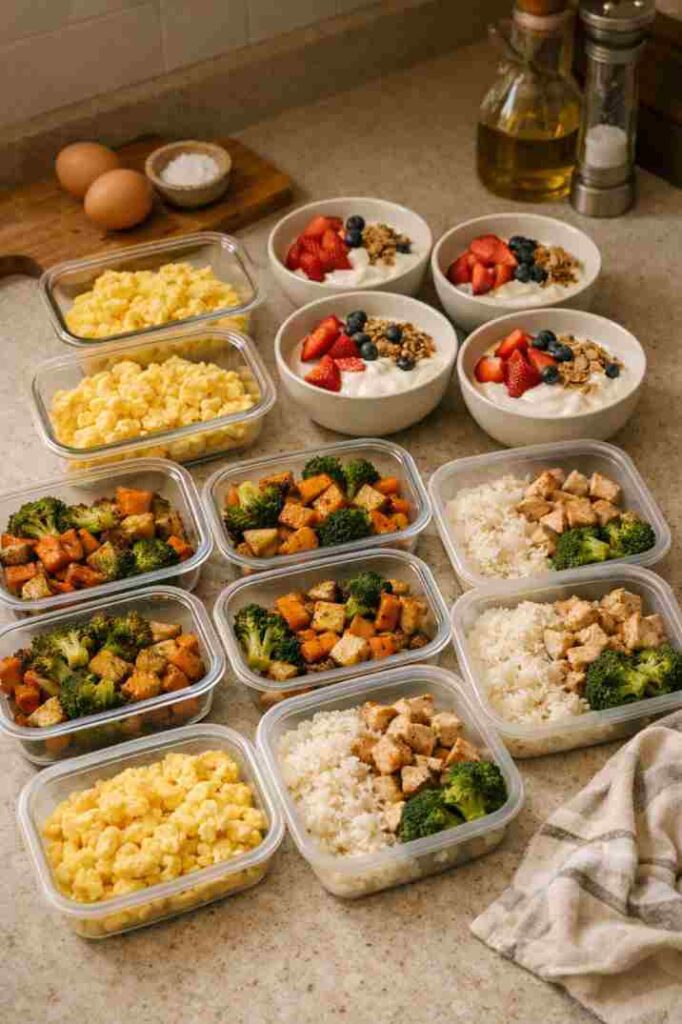
Week one is intentionally simple. The meals repeat often so your brain can relax. This is about getting into a rhythm, not impressing anyone.
Day 1
Breakfast: Scrambled eggs with spinach and a slice of whole-grain toast
Filling, warm, and easy to digest first thing in the morning.
Lunch: Chicken salad with olive oil, lemon, and mixed veggies
Great for leftovers and doesn’t feel heavy.
Dinner: Baked salmon, roasted broccoli, and quinoa
Balanced without feeling like “diet food.”
Optional Snack: Greek yogurt with a few berries
Day 2
Breakfast: Greek yogurt with nuts and cinnamon
Fast, no cooking, and keeps me full.
Lunch: Leftover salmon bowl with veggies
One less meal to think about.
Dinner: Ground turkey stir-fry with frozen vegetables and rice
Busy-day friendly and easy to batch cook.
Optional Snack: Apple with peanut butter
Day 3
Breakfast: Eggs with avocado and toast
Simple and satisfying.
Lunch: Lentil soup with side salad
Comforting and filling.
Dinner: Chicken thighs, roasted sweet potatoes, green beans
Feels like a real dinner, not a compromise.
Optional Snack: Cottage cheese
Day 4
Breakfast: Yogurt with seeds and berries
Repeat meals make mornings easier.
Lunch: Leftover chicken and veggies
No extra effort required.
Dinner: Shrimp sautéed in olive oil with vegetables and rice
Quick and light but still filling.
Optional Snack: Handful of nuts
Day 5
Breakfast: Scrambled eggs with veggies
I rotate vegetables based on what I have.
Lunch: Tuna salad on whole-grain crackers
Easy assembly lunch.
Dinner: Turkey meatballs, zucchini noodles, marinara
Comfort food without feeling heavy.
Optional Snack: Dark chocolate square
Day 6
Breakfast: Yogurt bowl
This one never gets old for me.
Lunch: Leftover meatballs and veggies
Lunch doesn’t need to be exciting.
Dinner: Baked chicken, roasted carrots, quinoa
Reliable and filling.
Optional Snack: Fruit and cheese
Day 7
Breakfast: Eggs and toast
Keeping it simple on weekends too.
Lunch: Big mixed salad with protein
Use whatever protein is left.
Dinner: Sheet-pan salmon and vegetables
Minimal cleanup.
Optional Snack: Whatever sounds good and fits my hunger
📅 Week 2: Days 8–14 (Light Variety Without Overwhelm)
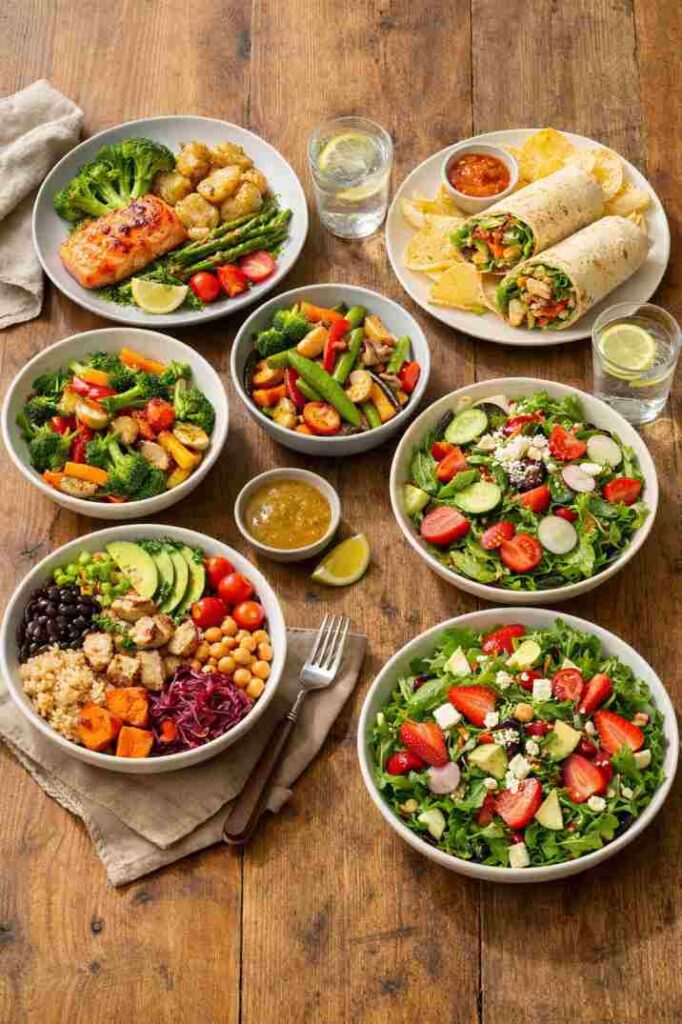
Week two adds small swaps so meals don’t feel boring, but the structure stays the same.
Day 8
Breakfast: Yogurt with nut butter and berries
More fat for extra fullness.
Lunch: Chicken wrap in whole-grain tortilla
Easy to take on the go.
Dinner: Beef stir-fry with veggies and rice
Great for batch cooking.
Optional Snack: Hard-boiled eggs
Day 9
Breakfast: Eggs with sautéed veggies
Warm breakfasts work best for me.
Lunch: Leftover beef bowl
Quick and satisfying.
Dinner: Baked cod, sweet potato, salad
Light but balanced.
Optional Snack: Yogurt
Day 10
Breakfast: Smoothie with protein, berries, and seeds
Perfect when I don’t feel like chewing.
Lunch: Lentil leftovers
Soups get better the next day.
Dinner: Chicken fajita bowl
Easy to customize.
Optional Snack: Nuts
Day 11
Breakfast: Eggs and toast
A classic that always works.
Lunch: Tuna salad bowl
No stove required.
Dinner: Turkey chili with beans
Comfort food that lasts for days.
Optional Snack: Fruit with nut butter
Day 12
Breakfast: Yogurt bowl
Still here. Still reliable.
Lunch: Leftover chili
One less decision.
Dinner: Shrimp and veggie stir-fry
Quick and flexible.
Optional Snack: Cheese
Day 13
Breakfast: Scrambled eggs
No thinking required.
Lunch: Big salad with protein
Use leftovers again.
Dinner: Roasted chicken, potatoes, veggies
Feels like a family dinner.
Optional Snack: Chocolate or yogurt
Day 14
Breakfast: Anything from the week
I pick what sounds best.
Lunch: Leftovers or simple sandwich
No pressure.
Dinner: Favorite dinner from the plan
Ending on something familiar.
Optional Snack: Optional, always optional
Simple Prep Tips That Made This Meal Plan Work for Me
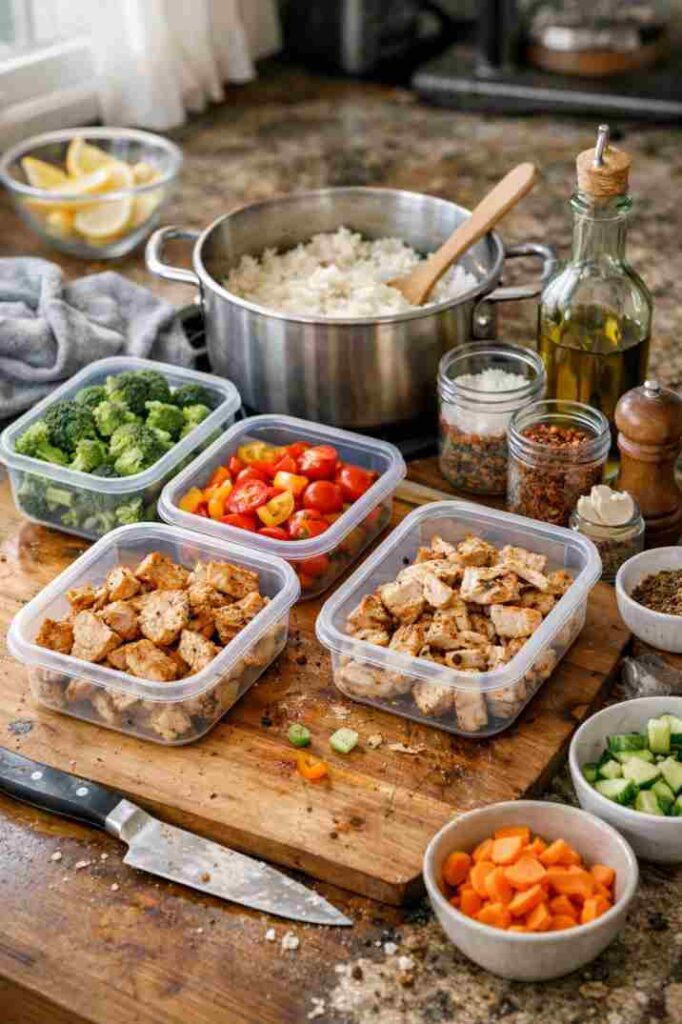
I used to think meal prep meant cooking everything on Sunday and eating sad leftovers all week. That never worked for me.
What works now is prepping ingredients, not full meals.
I usually cook protein in bulk. A tray of chicken. A pot of lentils. Some ground turkey. That gives me options without locking me into one meal.
Vegetables get washed and chopped ahead of time. Sometimes I roast a big batch. Sometimes I just make them easy to grab.
Frozen vegetables are a lifesaver. They’re always there. No guilt when fresh produce goes bad.
I shop with a short list. Proteins first. Then vegetables. Then a few carbs. I don’t buy everything for every meal. I buy flexible ingredients.
What didn’t work? Over-planning. Too many recipes. Trying to prep every snack. Now I keep it boring on purpose.
Grocery List Breakdown (Simple & Repeatable)
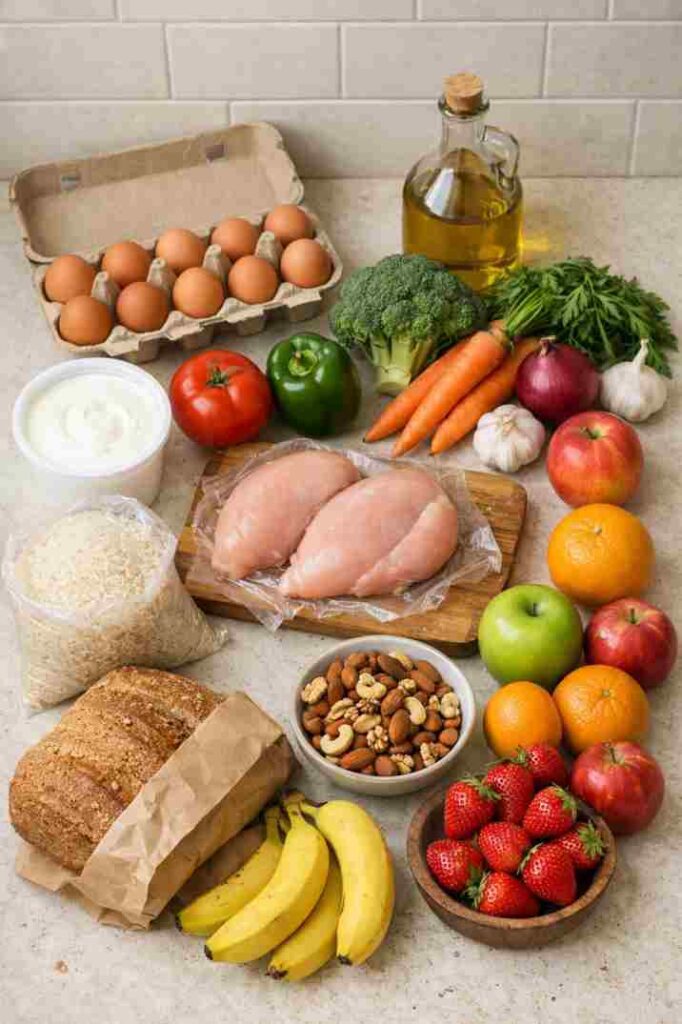
Proteins
- Eggs
- Chicken thighs or breasts
- Ground turkey or beef
- Salmon or cod
- Greek yogurt
- Cottage cheese
- Canned tuna or lentils
Vegetables
- Spinach
- Broccoli
- Zucchini
- Bell peppers
- Carrots
- Mixed salad greens
- Frozen veggie blends
Carbs
- Quinoa
- Brown or white rice
- Sweet potatoes
- Whole-grain bread or tortillas
- Beans
Fats
- Olive oil
- Avocado
- Nuts
- Seeds
- Nut butter
Pantry Staples
- Salt
- Pepper
- Garlic
- Cinnamon
- Marinara sauce
Substitute freely. If something feels stressful to buy, skip it.
Common Meal Plan Mistakes I Made
I used to plan too many new meals at once. It looked great on paper. In real life, it was exhausting.
I also tried cutting carbs way too aggressively. That left me hungry and cranky. Now I include them thoughtfully instead of fearing them.
Another mistake was chasing perfection. One “off” meal would make me want to quit. Now I just move on.
Meals that didn’t keep me full were another issue. If I’m hungry an hour later, that meal needs adjusting. No guilt. Just information.
How I Adjust This Meal Plan for Real Life
Eating out happens. Family meals happen. Busy days happen.
If I eat out, I aim for balance, not control. Protein, vegetables, something I enjoy.
If dinner doesn’t match the plan, that’s okay. The plan is a guide, not a rulebook.
Missed meals happen too. I don’t “fix” them later. I just eat the next time I’m hungry.
This flexibility is what makes the plan sustainable for me.
How I Know This Way of Eating Is Working for Me
I notice it in small ways.
I’m not thinking about food constantly.
I feel steadier throughout the day.
Meals don’t feel stressful anymore.
My routine feels easier. My choices feel calmer. That’s how I know this approach works for me.
Wrap Up…
You don’t need to follow every meal in this 14 day insulin resistance meal plan for it to help. Even a few days of structure can make meals feel less overwhelming.
This plan gave me something I didn’t have before — a way to eat that feels steady, flexible, and realistic.
Progress matters more than perfection. Start with what feels easiest. Repeat the meals you like. Skip the ones you don’t.
Food doesn’t have to be stressful to be supportive. This is just one way to make it feel simpler again.